The problem of a goat simulator
In 2014 a small Swedish studio released a game about being a goat. It started as a joke at an internal game jam. The store page lists “MILLIONS OF BUGS!” as a feature, promises to fix only the ones that crash the game, and honestly suggests you spend your ten dollars on a hula hoop, a pile of bricks or a real goat instead.1
Two and a half million people ignored that advice within a year.2
Now imagine you are one of them. You spend an evening licking pedestrians and headbutting a gas station into the sky. You close the game. And the shop quietly files you under simulators. Here is one about farming. Here is one about trucks. Have you considered being a bee?
Nobody asked why you played it.
- Farming Simulator 22Simulation
- Bee SimulatorSimulation · Animals
- Euro Truck Simulator 2Simulation
- DEEEER SimulatorSimulation · Animals
- PowerWash SimulatorSimulation
Nineteen sofas
It is the oldest joke about recommendation engines. You buy a sofa, and for the next month the internet offers you sofas, as if the first one unlocked a hobby.
Game shops did the same thing, with better artwork. User tags arrived on Steam in February 2014, two months before the goat,3 and for years “more like this” mostly meant “more with these labels.” Meanwhile the shelf got very long. 435 games came out on Steam in 2013. In 2021 it was 11,389, which is about thirty a day.4 A quarter of them sold fewer than a hundred copies.5
A label tells you what a game is. It says nothing about what it does to you. People have been trying to name that second thing for decades. One of the first attempts, from 1996, sorted the players of a single British text adventure into four card suits: diamonds for achievers, spades for explorers, hearts for socializers, clubs for killers.7 A later model, built on surveys of more than 400,000 gamers, landed on twelve motivations.8 None of the twelve is “animals.”
The job is not to offer nineteen sofas. The job is to hit the taste.
Gameplay, not genre
So that is what the first Hattl did. You name the games you loved, up to three, press a button, and get a list of what to play next, each with a match percentage. No genres. No tags.
The idea we built on fits in a sentence: compare the experience of playing, not the games. Under the hood that meant looking at a huge amount of real play, millions of in-game hours from thousands of players, and learning which games give people the same feeling. The plot, the gameplay, the emotions, the way people actually play through them. If the same kind of player loses whole weekends to both A and B, then A and B scratch the same itch, whatever it says on the box.
Here is a small working model of it. Go on, it starts with the goat.
will apear here
A goat and a goose have nothing in common on a shelf. One is a simulator, the other a puzzle game. In the hands of the people who play them, they are the same evening.
The screen
The engine was half the product. The other half was making a huge table of numbers feel like a friend with good taste. A few decisions did most of that work.
Three games, not one. One game is a genre. Three games are a taste. Pick Zelda alone and the honest answer is “more Zelda.” Pick Zelda, Hollow Knight and Stardew Valley and you have told us something no tag can. One game was allowed, but the screen asked for three.
A number on every card. “87% match” is a promise, so we explained it right there on the screen: pay attention to the percentage sign, it is how well this game fits your choice, and we release a new version of the algorithm several times a month. People forgive a wrong recommendation much faster when you have told them how sure you were.
Every result is a link. Each set of recommendations could be copied and sent to a friend, and the home page showed other people’s recent queries. Nobody wants to fill in a form. Everybody wants to see what a stranger typed.
A button for the undecided. “Test your luck” picks random games and runs the search for you. For anyone who arrives without three favorites ready, it is the whole product in one click.
A character for every taste. Every result came with a playful taste card, a character with a name like Cat-o-Hell, Purrrmeister or Lady Indiess and a line about what kind of player you are. A list of games is information. A character is something you send to your friends.
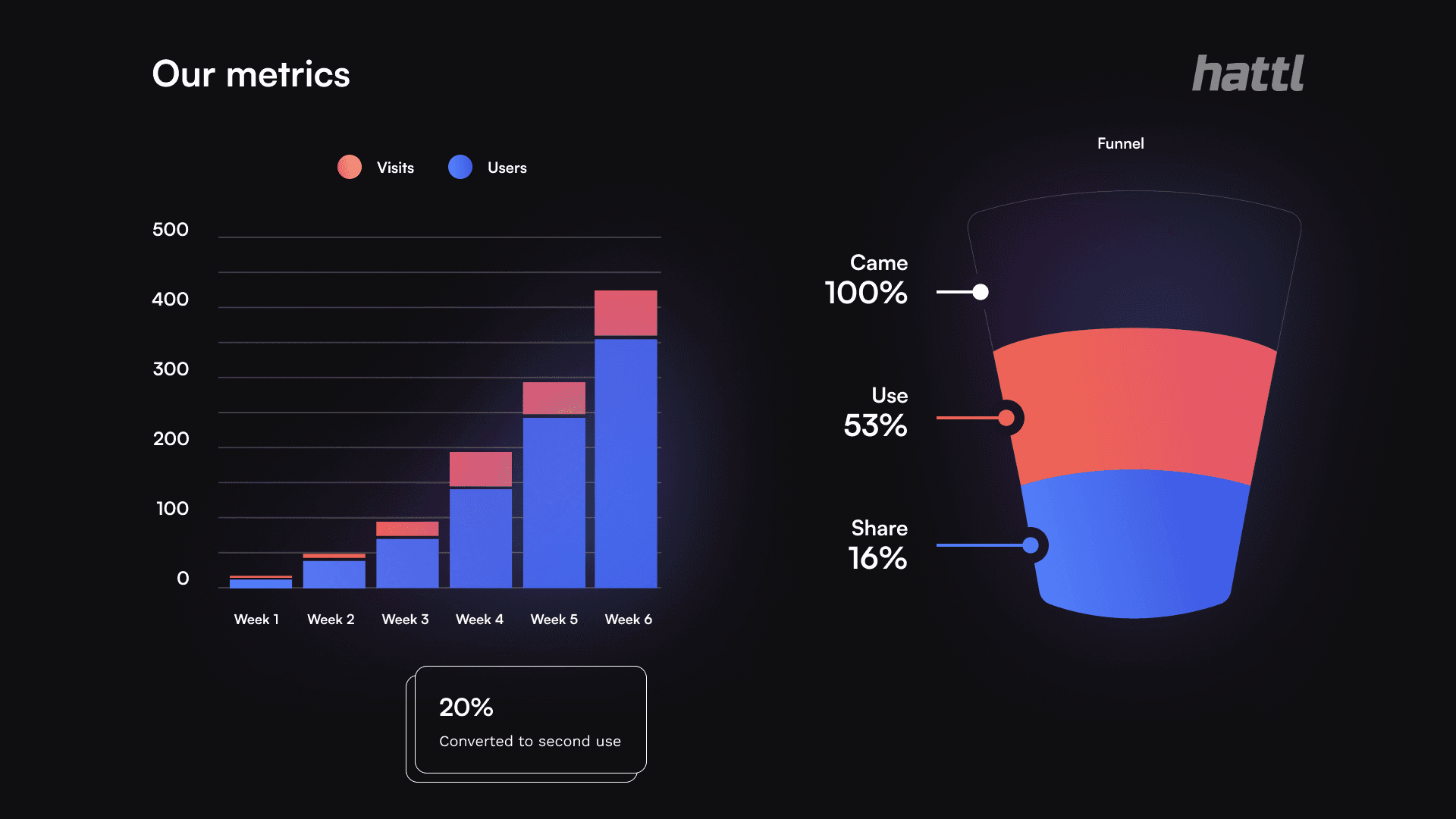
I still think that funnel is the best argument we ever had. One in six people who arrived handed the thing to somebody else. For a product with no marketing budget, that was the marketing.
Why it did not work
It was not the algorithm. It was everything around it.
We had only just started our journey as founders, and after a forced migration we were not settled in any country yet. Building a company while you are working out where you live is a hard way to learn either.
And the road to money was long. The plan on the slide was a free tier for everybody, a personal subscription at $3.99 a month, and a business plan from $49. But nobody subscribes to a search box. A subscription needed a platform around it: your games, your moods, your people, “Spotify for gamers.”
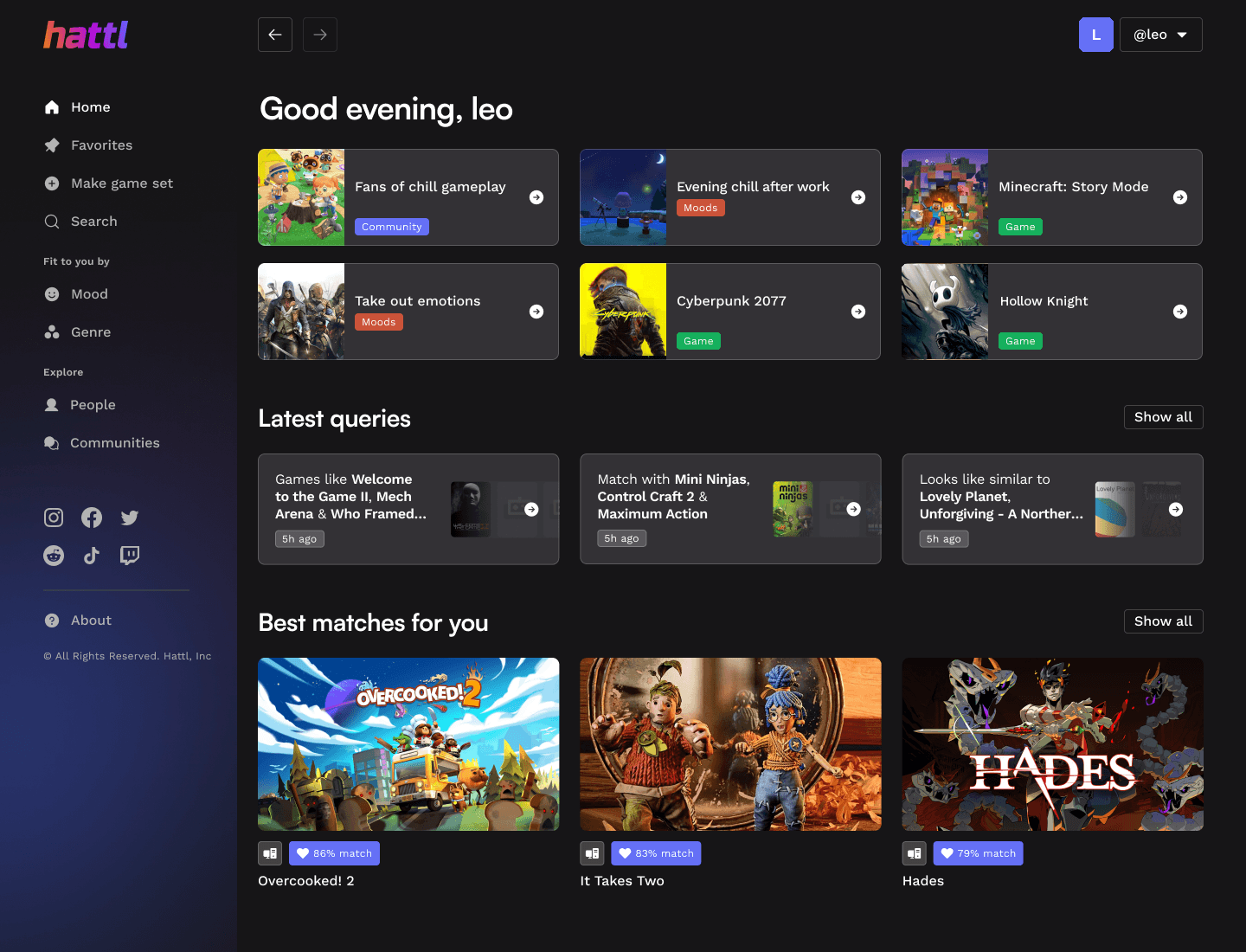
Which meant the road from a clever search box to a business ran through a whole second product, and through a funding round to pay for it. It was a long road, and we did not reach the end of it.
What stayed
I got three things out of it that I would have happily paid tuition for.
Commercialization. A product people love and a product people pay for are two different products, and you have to design the second one on purpose, from the first day.
Networking. Every investor call, the good ones and the bad ones, was a rehearsal for the next one. By the end we could pitch the idea in a sentence, and we knew who to call next time.
And resilience, which is a polite word for continuing to ship while everything around you is on fire.
The idea outlived the company. Stop matching on the label, match on the why. Two years later we pointed it at something with even worse labels than games: CVs.
- Goat Simulator store page, including the “MILLIONS OF BUGS!” feature list
- Goat Simulator: origin as a January 2014 game-jam prototype, release on April 1, 2014, sales of 2.5 million by January 2015
- Engadget, “Steam Tags help you find games based on custom criteria,” February 12, 2014
- Games released on Steam per year, from SteamDB counts
- Game World Observer on VG Insights data: 27% of 2021 releases sold under 100 copies
- Ars Technica’s 2014 estimate of never-played Steam games, later corrected to about 26%
- Richard Bartle, “Hearts, Clubs, Diamonds, Spades: Players Who Suit MUDs,” 1996
- Quantic Foundry, “A Deep Dive into the 12 Motivations,” GDC 2019